

 English
 Español
 日本語
日本語 عربى
عربى русский
-
PVC Picture Frame
Sold by brand JinHuan

-
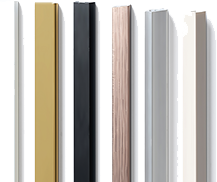
PVC Moulding
Sold by brand JinHuan
-
MDF Picture Frame
Sold by brand JinHuan

-
Iron Photo Frame
Sold by brand JinHuan

-
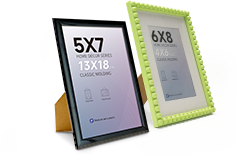
Plastic Injection Frame
Sold by brand JinHuan
-
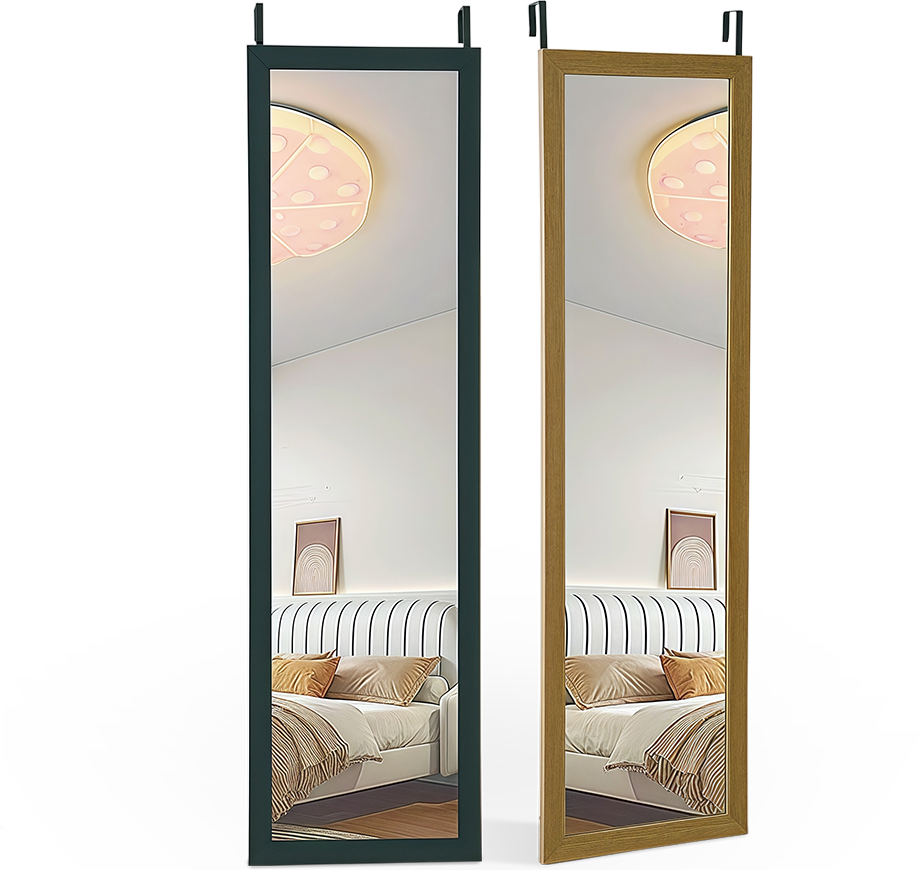
Mirror
Sold by brand JinHuan
-
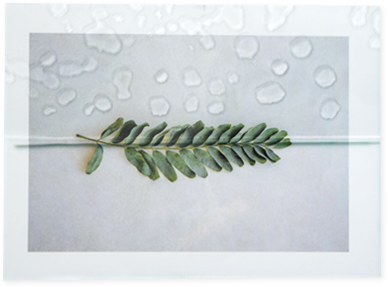
Glass Picture Frame
Sold by brand JinHuan
-
PS Picture Frame
Sold by brand JinHuan

-
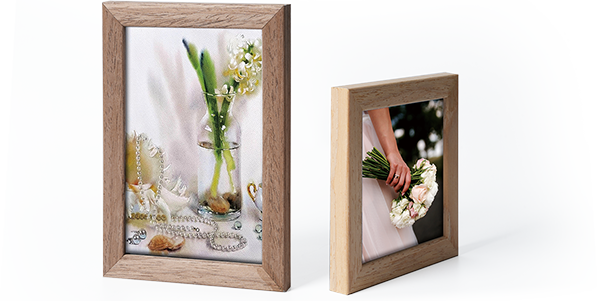
Solid Wood Picture Frame
Sold by brand JinHuan
-
Aluminum Alloy Picture Frame.
Sold by brand JinHuan

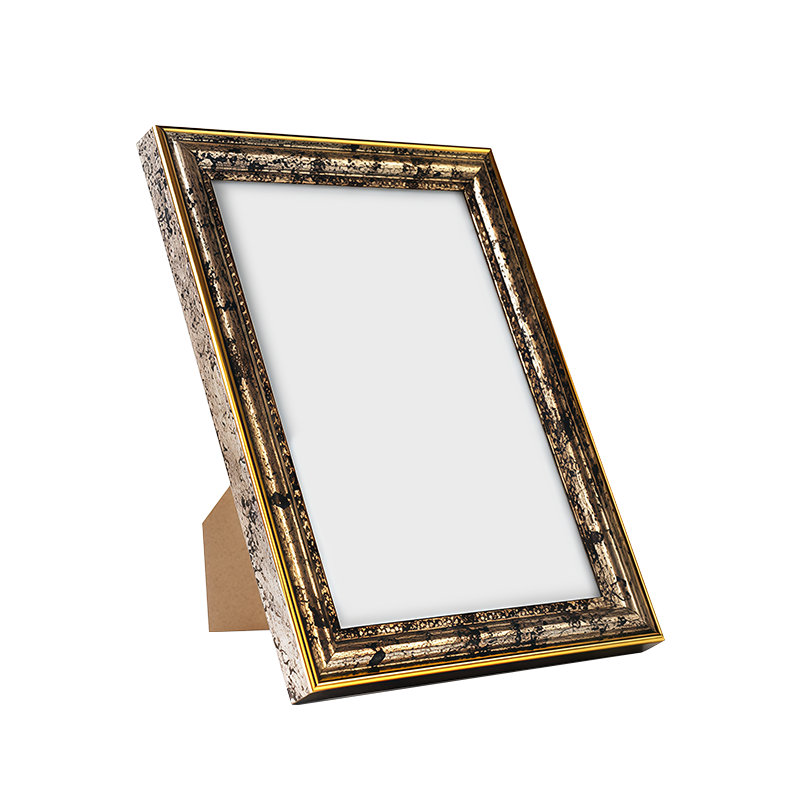
PS Photo Frame – Surface Finishes and Application Considerations

Jinhuan's professional manufacturing solutions empower your premium product production.
What Raw Material Properties Define PS Photo Frames?
Polystyrene is a thermoplastic polymer derived from styrene monomers. For photo frame applications, manufacturers typically use high-impact polystyrene (HIPS) rather than general-purpose polystyrene (GPPS). HIPS contains approximately 5% to 15% polybutadiene rubber particles dispersed in the polystyrene matrix, which increases impact resistance without significantly raising material cost.
Material characteristics:
- Density: 1.04 to 1.06 g/cm³ (lighter than acrylic at 1.18 g/cm³ and glass at 2.50 g/cm³)
- Melting temperature range: 180°C to 260°C (processing window)
- Water absorption: below 0.05% over 24 hours (resistant to humidity-related warping)
- Tensile strength: 20 to 40 MPa, depending on rubber content
- Flexural modulus: 1,500 to 2,200 MPa (stiffer than polypropylene but more brittle than ABS)
- Heat deflection temperature (0.45 MPa): 85°C to 95°C (softens near boiling water temperature)
PS material accepts pigments and fillers readily. Common additives include calcium carbonate (5% to 20% by weight) to reduce material cost and increase stiffness, and UV stabilizers (0.1% to 0.5%) to slow yellowing when frames are placed in direct sunlight. Without UV stabilizers, PS frames show visible color shift after 6 to 12 months of window exposure.
Manufacturing Process: From Granules to Finished Frame
PS photo frames are produced using injection molding, a process that converts polystyrene granules into finished shapes in cycles lasting 20 to 60 seconds per mold cavity.
Step-by-step production sequence:
Material drying: PS granules are dried at 80°C for 2 to 4 hours to remove surface moisture. Residual moisture above 0.1% creates silver streaks or bubbles on molded surfaces.
Injection molding: The screw-type injection molding machine heats PS to 200°C to 240°C. Molten plastic is injected into a steel mold at pressures of 500 to 1,500 bar. The mold cavity defines the frame's front profile, back channel for glass or backing board, and hinge or tab features.
Cooling and ejection: The mold cools the part to below 80°C using circulating water channels. Cooling time accounts for 40% to 60% of the total cycle. The part is ejected by pins that leave small circular marks (0.5 to 1.5 mm in diameter) on the back surface.
Degating and finishing: The sprue and runner system (solidified plastic channels) are trimmed off. For visible frame edges, operators use fine sandpaper or manual trimming knives to remove flash—thin excess plastic along mold parting lines.
Cycle time breakdown for a typical 20 cm × 25 cm frame:
|
Production Stage |
Time (seconds) |
Percentage of Cycle |
|
Mold close and injection |
3–5 |
10% |
|
Packing and holding pressure |
2–4 |
7% |
|
Cooling |
15–25 |
50–60% |
|
Mold open and ejection |
3–5 |
10% |
|
Degating and visual inspection |
8–12 |
20–25% |
Surface Decoration Methods and Visual Quality
PS photo frames accept various surface treatments that determine their final appearance and price point.
Quality indicators to examine:
Sink marks: Depressions on the front surface opposite thick back features (e.g., hinge mounts). Visible sink marks indicate inadequate packing pressure or poorly designed rib thickness.
Weld lines: Visible lines where two melt fronts meet inside the mold, typically near corners or cutout areas. Pronounced weld lines reduce local strength by 20% to 40%.
Gate blush: A cloudy or silvery mark near the injection point, caused by shear heating. Acceptable gate blush diameter is under 5 mm.
Practical Considerations for Selection and Use
Weight and handling characteristics
A PS frame measuring 20 cm × 25 cm with 15 mm profile width weighs 180 to 250 grams, compared to 350 to 500 grams for a wood frame of similar dimensions and 600 to 900 grams for a metal frame. The lower weight reduces the need for wall anchors when hanging on drywall; a single small nail or picture hook rated for 2 kg is sufficient. However, the light weight also means the frame may shift position when doors slam or when subject to vibration from nearby foot traffic.
Environmental stability
PS frames maintain flatness between 5°C and 45°C and relative humidity from 20% to 80%. Above 50°C (e.g., inside a parked car on a sunny day), the frame may warp, or the backing board may stick to the plastic surface. Below 5°C, impact resistance drops significantly; a fall from 0.5 meters onto a tile floor may cause cracking. For bathrooms or kitchens with steam exposure, PS frames perform adequately because water absorption is negligible, but steam condensation can seep between the frame and glass if the back seal is incomplete.
Your email address will not be published. Required fields are marked *
China Picture Frames Online Factory
Copyright © JinHuan Art & Craft Products Co., Ltd. All Rights Reserved.
